Commercial Refrigeration Installation
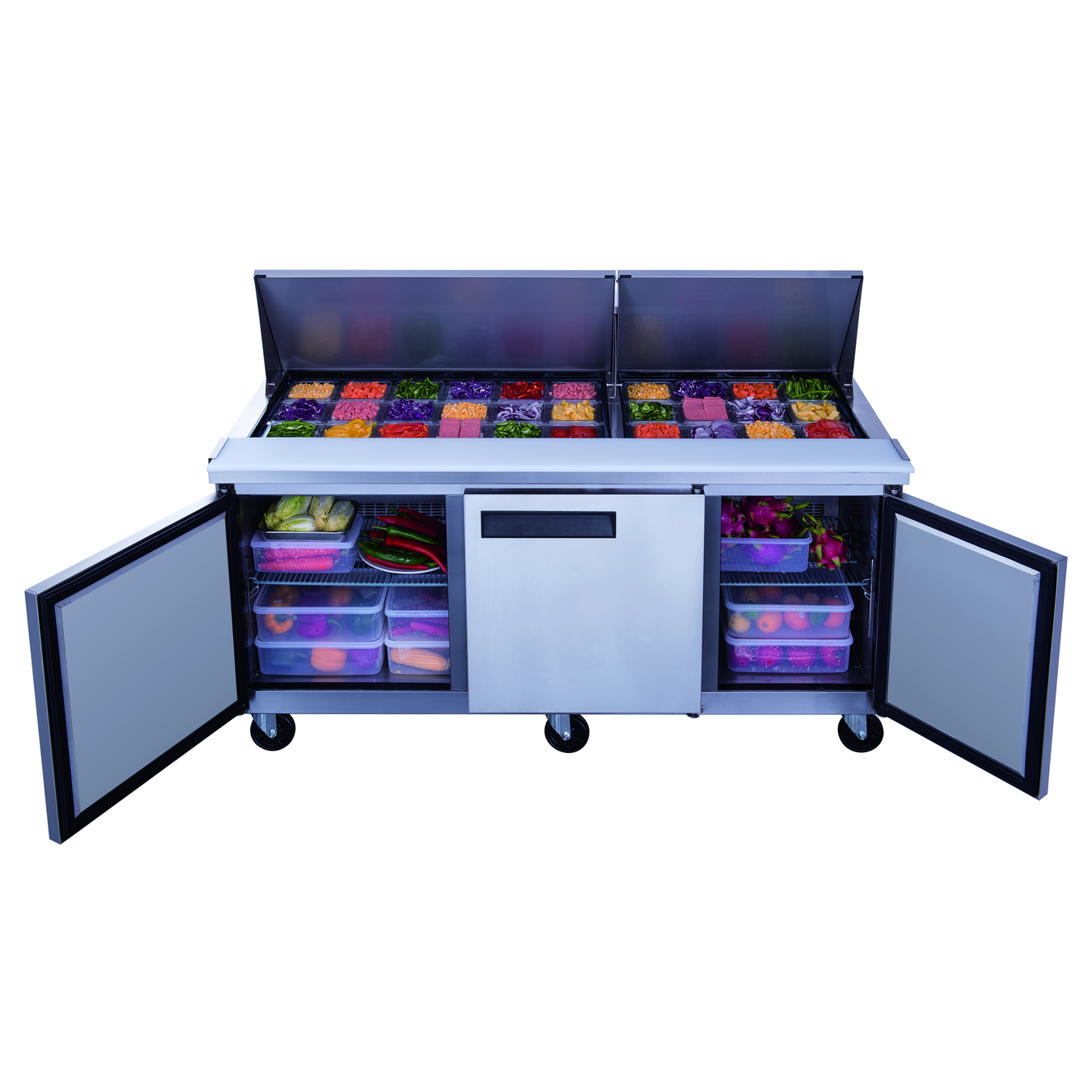
Reach-ins, undercounters, prep tables, merchandisers and remote condensing systems set, charged, and verified against manufacturer temperature specs.
Please contact your hosting company to resolve services.
Dispatch Mon–Sat 7am–7pm · Emergency line 24/7 Statewide Texas coverage
24/7 Emergency Service
info@corekitchenservices.com 214-730-0199Installation Division
Installation is where equipment either earns its warranty or quietly starts costing you money. Our crews uncrate, set, level, connect and commission each unit, coordinate the gas, water, drain and electrical trades, and hand you documented startup readings before the first shift runs.
Overview
Most equipment failures we get called out to in the first year of a kitchen's life are not manufacturing defects — they are installation defects. A reach-in set too close to a wall so the condenser recirculates its own hot air. A combi oven fed by a gas line already at capacity from the fryer battery. A dish machine drained into a line with no air gap. The unit works on day one, fails inspection or performance on day sixty, and the warranty claim gets denied because startup was never documented.
Our installation division exists to close that gap. We treat installation as a commissioning discipline rather than a delivery task: verify the site before the truck is loaded, sequence deliveries against the construction calendar, set and connect with licensed trade coordination, then test each asset and hand over written startup readings. The readings matter — they establish that the equipment left our hands performing to specification, which is what protects your warranty position later.
Work ranges from a single replacement fryer dropped into an operating line between service periods, to a full kitchen buildout where dozens of assets have to land in the right order without blocking the trades behind them. Both get the same documentation package.
Reach-ins, undercounters, prep tables, merchandisers and remote condensing systems set, charged, and verified against manufacturer temperature specs.
Panel assembly, floor and door alignment, refrigeration tie-in, drain routing and pull-down testing with documented box temperatures.
Freezer builds with heater wire, vapor barrier and defrost setup handled correctly so you avoid frost heave, sweating panels and iced floors.
Head and bin mounting, water line and filtration, drain configuration, and first-harvest testing to confirm cube quality and production rate.
Fryers, ranges, ovens, combis, dish machines, mixers and holding equipment set in place, connected, calibrated and demonstrated to your staff.
Full line setup for new builds and remodels: staging deliveries, sequencing installs by trade, and punch-listing every asset before opening.
Hood setting, exhaust and make-up air balancing, fire suppression coordination, and capture testing so the line stays inspection-ready.
We coordinate licensed gas, water and drain connections, verify pressures and check for leaks before any burner is lit.
What you get
How it runs
We verify door paths, clearances, drain locations, gas capacity and electrical service against the equipment schedule before delivery.
Deliveries are sequenced so units are not sitting in a hallway or on an unfinished slab waiting for trades.
Units are uncrated, set, leveled and tied into gas, water, drain and electrical with licensed trade coordination.
Startup testing, calibration, safety checks and written readings per asset, plus warranty registration and a staff walkthrough.
Scope
Signals
Equipment focus
Every category below is handled in-house by technicians who work on it weekly, across all major commercial foodservice brands regardless of who originally supplied it.
Reach-ins, undercounters, prep tables, walk-in coolers and freezers, blast chillers and remote condensing systems. Line sets are evacuated and charge verified rather than topped off, and we log pull-down times so you have a performance baseline.
Ranges, fryers, griddles, charbroilers, convection and combi ovens, steamers and rethermalizers. Gas capacity, manifold pressure and hood capture are verified per position before sign-off, not assumed from the equipment schedule.
Door-type, undercounter and conveyor dish machines, booster heaters, disposers and pulpers. Final rinse temperature, chemical feed and air gap compliance are tested and recorded on the commissioning sheet.
Ice machines and bins, water filtration, beverage systems, holding and proofing cabinets, heated wells and merchandisers. Filtration is sized to local water conditions so production does not fall off in the first summer.
Costly mistakes
These are the patterns behind the majority of the avoidable failures we get called out to. None of them are exotic — they are all decisions made to save time or money that cost multiples of both later.
Equipment staged on an unfinished slab gets damaged, moved by other trades, and sometimes uncrated by people who will not be servicing it. Sequencing costs nothing and prevents all three.
New equipment is frequently more demanding than what it replaces. Gas and electrical capacity should be recalculated against the new schedule, not inherited.
Uncommissioned equipment opens with drift already baked in. A half-day of testing before service is cheaper than a health inspection during it.
Who we work with
Independent kitchens and multi-unit groups that need the line back up before the next service.
Banquet kitchens, room service lines and event catering with unpredictable peak loads.
Cafeteria and commissary equipment maintained on academic calendars and inspection cycles.
Regulated kitchens where temperature documentation and uptime are non-negotiable.
Deli cases, prep coolers, ice and hot-hold equipment kept in spec across store footprints.
Compact builds where every inch of cold storage and every burner has to earn its place.
Brands we work on
Local delivery
Questions
Scheduled visits, documented per asset, plus emergency coverage for the nights when something still goes down mid-service.
Layouts, shelving and refrigerated capacity planned around how your kitchen actually receives, rotates and pulls product.
Equipment planning, layout and workflow support, procurement coordination and compliance guidance before a single unit is ordered.
Site directory
Other divisions, the Texas markets we cover, and city pages for this division.
Set, connected, started up and verified — walk-ins, ice machines, cooking lines and hood systems installed by crews who commission equipment every week.
Scheduled visits, documented per asset, plus emergency coverage for the nights when something still goes down mid-service.
Layouts, shelving and refrigerated capacity planned around how your kitchen actually receives, rotates and pulls product.
Equipment planning, layout and workflow support, procurement coordination and compliance guidance before a single unit is ordered.