
Preventative Maintenance Programs
Monthly, quarterly or semi-annual visits scheduled around your service hours, with a written condition report and repair forecast per asset.
Please contact your hosting company to resolve services.
Dispatch Mon–Sat 7am–7pm · Emergency line 24/7 Statewide Texas coverage
24/7 Emergency Service
info@corekitchenservices.com 214-730-0199Maintenance Division
Most emergency calls we run were preventable: dirty condensers, worn gaskets, scaled ice machines and drifting thermostats. A maintenance program catches those on our clock instead of during your dinner rush, and gives you a written service history for every unit in the building.
Overview
Reactive repair is the most expensive way to own commercial kitchen equipment. The invoice is only part of it — the real cost is the product you dump when a walk-in drifts overnight, the covers you turn away when the fryer battery is down on a Friday, the overtime paid to work around a dead dish machine, and the capital spend that arrives without warning because nobody was tracking condition.
A maintenance program moves that spend from unpredictable to planned. We start by tagging your assets so service history follows the equipment rather than a stack of paper tickets. Visit frequency is then set per asset class and volume — a high-volume fryer line and a back-office undercounter do not need the same interval — and scheduled around your service hours.
The output of every visit is a written condition report per asset with a repair forecast. That forecast is what lets you replace a fifteen-year-old compressor during a slow week in a budget cycle you planned, instead of at 6pm on a Saturday at emergency rates.
Emergency repair is still part of the division, because equipment fails. Program customers get priority dispatch and a confirmed arrival window — and because we already hold the asset history, technicians arrive knowing the model, the service record and usually the likely failure.
Monthly, quarterly or semi-annual visits scheduled around your service hours, with a written condition report and repair forecast per asset.
Condenser and evaporator cleaning, refrigerant and superheat checks, defrost verification, gasket and door alignment, and temperature logging.
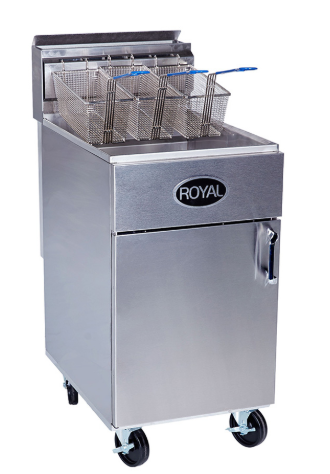
Fryers, ranges, ovens, steamers, dish machines, mixers and holding equipment inspected, calibrated and repaired with OEM parts.
Priority dispatch for plan customers with confirmed arrival windows, stocked trucks and a written diagnosis before work begins.
Pre-summer refrigeration and ice machine prep, cold-weather gas and heating checks, and holiday-volume readiness inspections.
Sourcing, tracking and installing replacement parts, plus warranty claim filing and follow-through with the manufacturer.
What you get
How it runs
We tag and record every unit — make, model, serial, location — so service history follows the equipment, not a paper ticket.
Visit frequency is set per asset class and volume, then scheduled around your service hours rather than ours.
Coil cleaning, gasket and door checks, refrigerant and gas safety verification, calibration and electrical inspection.
You get a condition report per asset with repair forecasts, so replacements land in a budget cycle instead of a crisis.
Scope
Signals
Equipment focus
Every category below is handled in-house by technicians who work on it weekly, across all major commercial foodservice brands regardless of who originally supplied it.
Coil cleaning, refrigerant and superheat verification, defrost cycle checks, gasket and hinge service, drain line clearing, and temperature logging across walk-ins, reach-ins and prep units.
Burner and pilot service, thermostat and control calibration, gas safety and combustion checks, fryer high-limit testing, and door seal and hinge adjustment on ovens and combis.
Descaling, wash and rinse temperature verification, chemical feed calibration, spray arm and jet cleaning, and booster heater performance checks.
Cleaning and sanitizing on manufacturer intervals, water filter replacement, scale control, production rate testing and bin thermostat verification.
Costly mistakes
These are the patterns behind the majority of the avoidable failures we get called out to. None of them are exotic — they are all decisions made to save time or money that cost multiples of both later.
In Texas kitchens, condenser coils load with grease and dust far faster than the manual assumes. Dirty coils raise head pressure, shorten compressor life and quietly add to the power bill for months before anything fails.
A torn gasket is a cheap part that makes an expensive compressor run continuously. It is the single most common finding on our first visit to a new account.
Without history there is no way to tell whether a unit is worth another repair. Operators end up paying for a third repair on equipment that should have been replaced after the first.
Who we work with
Independent kitchens and multi-unit groups that need the line back up before the next service.
Banquet kitchens, room service lines and event catering with unpredictable peak loads.
Cafeteria and commissary equipment maintained on academic calendars and inspection cycles.
Regulated kitchens where temperature documentation and uptime are non-negotiable.
Deli cases, prep coolers, ice and hot-hold equipment kept in spec across store footprints.
Compact builds where every inch of cold storage and every burner has to earn its place.
Brands we work on
Local delivery
Questions
Set, connected, started up and verified — walk-ins, ice machines, cooking lines and hood systems installed by crews who commission equipment every week.
Layouts, shelving and refrigerated capacity planned around how your kitchen actually receives, rotates and pulls product.
Equipment planning, layout and workflow support, procurement coordination and compliance guidance before a single unit is ordered.
Site directory
Other divisions, the Texas markets we cover, and city pages for this division.
Set, connected, started up and verified — walk-ins, ice machines, cooking lines and hood systems installed by crews who commission equipment every week.
Scheduled visits, documented per asset, plus emergency coverage for the nights when something still goes down mid-service.
Layouts, shelving and refrigerated capacity planned around how your kitchen actually receives, rotates and pulls product.
Equipment planning, layout and workflow support, procurement coordination and compliance guidance before a single unit is ordered.